Truman P. Young

Department of Plant Sciences
University of California
Davis, CA
95616 USA

Research

Restoration Links

Laikipia links

Graduate Students


  Courses
  ENH 6
  ENH 160
  PLS 147
  ERS 141
Publications

Back to Main

Tel. 530-754-9925 
Fax: 530-752-4361 
Email:tpyoung@ucdavis.edu


Truman P. Young

Department of Plant Sciences
University of California
Davis,
CA 95616  USA

Room 2234, PES Building

Tel.: 530-754-9925 
Fax: 530-752-1819 
E-mail: tpyoung@ucdavis.edu

tpyoung.jpg (14260 bytes)

1972-75 University of Chicago (B.A.)

1976-81 University of Pennsylvania (Ph.D.)

1992-96 Associate Professor, Fordham University

1996-2003 Lecturer, Assistant and Associate Professor, University of California, Davis

2003-present Professor, University of California, Davis

Research Interests:

I have broad interests in plant population and community ecology.  My early research (1970s and '80s) concentrated on basic and theoretical questions in population ecology, and the ecology of Mount Kenya.  For the past 20 years, I have become involved with more applied research at the community and landscape scales.  My current research projects are related to the management, conservation, and restoration of human-dominated landscapes, and to the maintenance of biodiversity.

My research focuses on the following projects:

  1. Contingency in restoration ecology (CIRE): priority effects, alternative states, and year effects
  2. Planting issues in ecological restoration (PIER)
  3. Livestock and biodiversity in an African savanna (KLEE)
  4. The maintenance of biodiversity in a model system (ACACIA)
  5. The evolution of semelparity

    Graduate student projects

I also collaborate with my wife, Lynne Isbell, in her studies of primate behavioral ecology.  I provide a life history and plant ecological perspective to her explorations of how food and predation influence the evolution of mammalian behavior. (behavioral ecology publications).

I am a member of the Graduate Group in Ecology and the Center for Population Biology.

UC Davis Spotlight article on the KLEE exclosure project

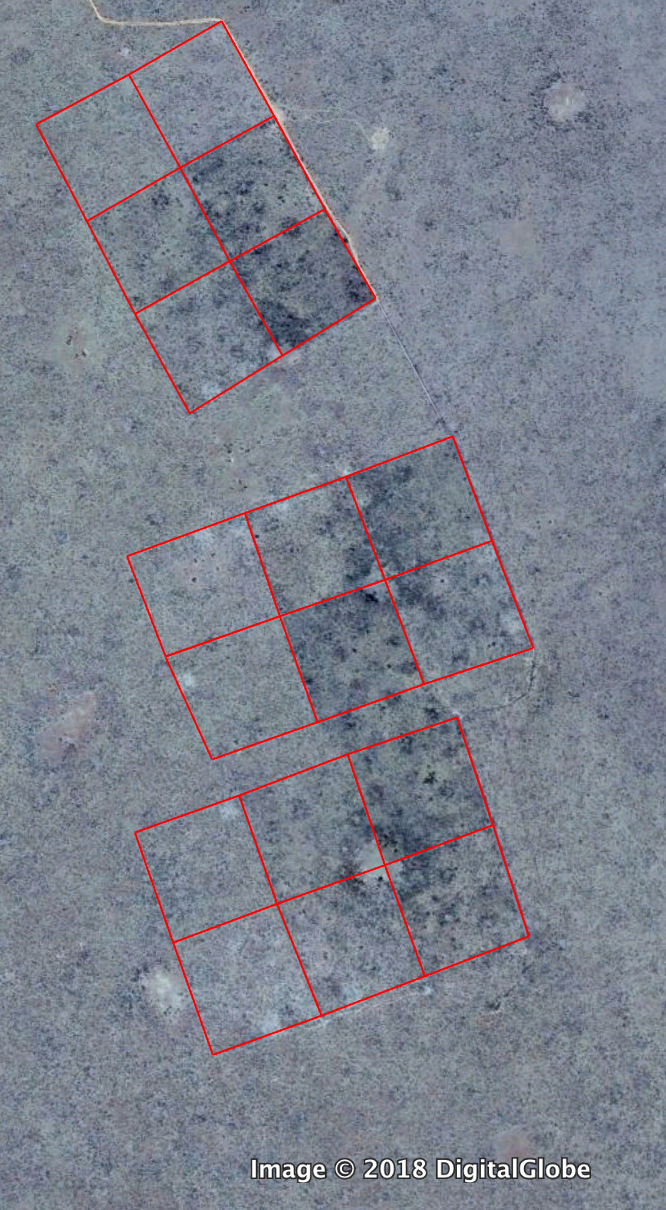
Satellite view

Satellite view of the KLEE exclosure plots in Laikipia, Kenya, where we have been excluding various combinations of cattle, wildlife, and mega-herbivores (elephants and giraffes) from a savanna grassland since 1995.  Each of the 18 plots is 200m x 200m.  This is an NDVI image, where lighter areas are indicative of higher productivity.  The larger white areas are anthropogenic glades, and the smaller white areas are low termite "mounds".  Both are hot spots of soil fertility, plant productivity, and animal use.

(Click on the image to enlarge)